

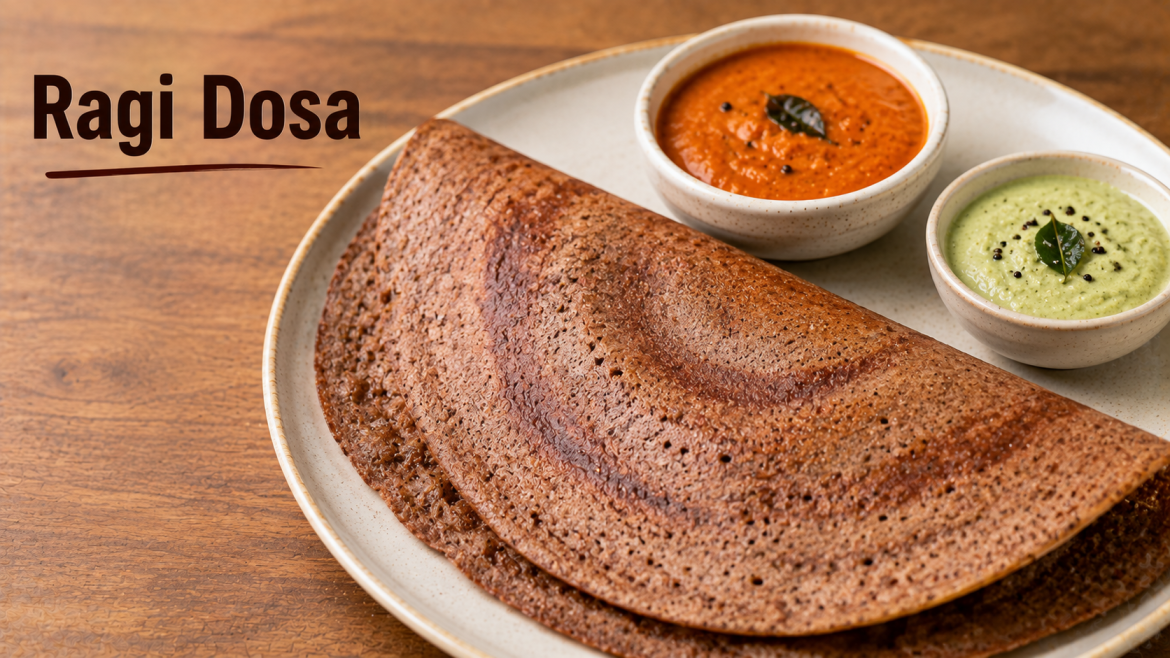
This incredibly crispy, beautifully golden-brown, and deeply nutritious Ragi Dosa is the ultimate morning savior for anyone looking to bring the wholesome, earthy flavors of a traditional South Indian kitchen right to their breakfast table. Whether you are meal-prepping for a busy academic week, feeding a health-conscious family, or simply searching for quick and healthy breakfast recipes to effortlessly elevate your morning rotation, this instant crepe hits all the right marks. Packed with calcium-rich finger millet flour, crunchy onions, and a vibrant tempering of cumin and green chilies, it delivers massive, homestyle satisfaction while remaining exceptionally budget-friendly, naturally vegetarian, and remarkably easy to assemble in under 20 minutes without any tedious overnight fermentation.
Origin Ragi Dosa
The culinary history of Ragi Dosa is deeply rooted in the agricultural heritage of South India, particularly in states like Karnataka and Tamil Nadu, where finger millet (ragi) has been a staple crop for thousands of years. Historically, millets were the primary energy source for hardworking agrarian communities due to their incredible drought resistance and high nutritional density. By grinding the rustic grain into a fine flour and adapting the beloved, traditional fermented rice crepe recipe into an “instant” version, historic cooks created a highly sustaining, instant meal. Today, recognizing the profound health benefits of ancient whole grains and millets, modern home cooks celebrate this vibrant, nutrient-dense classic as a highly functional centerpiece that perfectly balances simple, rustic cooking methods with robust, savory indulgence.
Why I Love This Recipe
I love how this recipe transforms the most basic, inexpensive pantry flours into a genuinely spectacular, highly texturized centerpiece with practically zero complicated prep or waiting time. It completely eliminates the heavy, sluggish feeling that often accompanies thick, refined-flour breakfast pancakes, relying instead on the natural lightness of ragi and a touch of semolina to beautifully satisfy your appetite while keeping you energized. It is one of the absolute best quick and comforting healthy meal ideas because the watery batter creates a stunning, lacy texture as soon as it hits the hot pan. You can serve your Ragi Dosa classically alongside fresh coconut chutney, dip it into piping hot sambar, or enjoy it completely on its own as a crisp, savory snack.
Tips for the Perfect Crisp
To achieve a shatteringly crisp, beautiful lacy texture rather than a thick, gummy pancake, managing your batter consistency and pouring technique is absolutely critical. First, you must ensure your batter is extremely thin and watery—similar to the consistency of buttermilk. This is an essential expert crepe-making technique; a thin batter allows the moisture to evaporate rapidly on the hot griddle, leaving behind a web of crispy flour. Furthermore, unlike traditional dosas where you spread the batter in a circular motion with a ladle, you must pour this instant batter from a slight height directly onto a screaming hot, well-oiled pan. Do not try to spread it! Just let it flow naturally to create those iconic, crispy holes that make Ragi Dosa so irresistible.
Also Read : Aperol Spritz
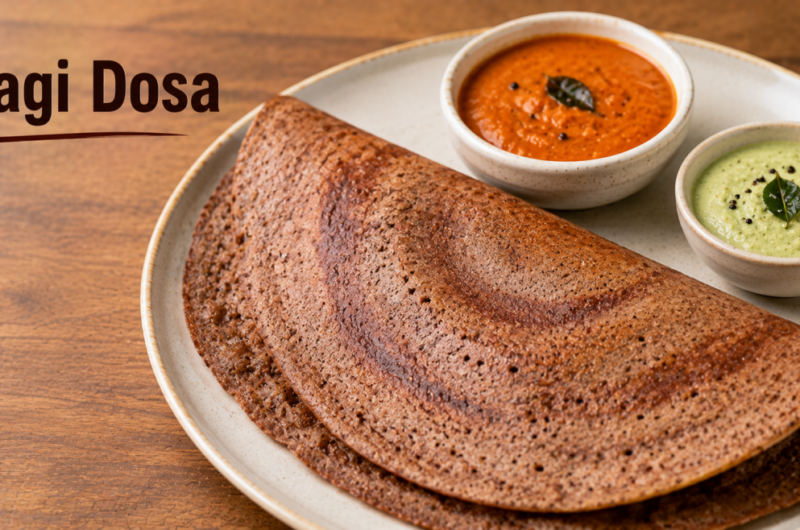
Ragi Dosa
Course: BreakfastCuisine: South IndianDifficulty: Easy4
servings10
minutes20
minutes150
kcalIngredients
1 cup Ragi flour (finger millet flour)
¼ cup rice flour (crucial for crispiness)
¼ cup fine semolina (rava/sooji)
½ cup plain yogurt (curd)
2 ½ to 3 cups water
1 medium red onion, very finely chopped
1-2 fresh green chilies, very finely chopped
1 tsp cumin seeds
1-inch piece of ginger, finely grated
2 tbsp fresh cilantro (coriander) leaves, finely chopped
1 tsp fine sea salt
1 tsp whole black peppercorns, slightly crushed (optional)
Vegetable oil or ghee (for pan-frying)
Directions
- Whisk the Dry Ingredients: In a large mixing bowl, combine the ragi flour, rice flour, and fine semolina. The combination of rice flour and semolina is what guarantees a crispy texture.
- Make the Batter: Add the plain yogurt, finely chopped onions, green chilies, cumin seeds, grated ginger, cilantro, crushed peppercorns, and sea salt to the bowl. Gradually pour in 2 ½ cups of water while whisking continuously to ensure there are absolutely no lumps.
- Rest the Batter: Let the batter rest for 10 to 15 minutes. The semolina will absorb some of the water. After resting, check the consistency. It should be very thin and watery. Add another ½ cup of water if it has thickened too much.
- Preheat the Pan: Heat a large cast-iron skillet or non-stick tawa over medium-high heat. It must be very hot. Lightly grease the surface with a few drops of oil using a paper towel or an onion half.
- Pour the Dosa (Crucial Step): Stir the batter well from the bottom (as the flours tend to settle). Take a ladleful of the watery batter and pour it from a slight height (about 3-4 inches above the pan), starting from the outer edges and moving towards the center. It should sizzle instantly and form a lacy, hole-filled pattern. Do not spread it with the ladle!
- Cook to Golden Perfection: Drizzle 1 teaspoon of oil or ghee around the edges and into the small holes of the dosa. Let it cook undisturbed on medium heat for 2 to 3 minutes until the base turns a deep golden brown and the edges start to lift. (Instant dosas take slightly longer to crisp up than regular dosas).
- Fold and Serve: You do not need to flip this dosa. Once it is beautifully crisp and golden on the bottom, simply fold it in half and slide it off the pan. Serve your stunning, hot Ragi Dosa immediately with coconut chutney!
Notes
- Stir Before Every Pour: Because ragi and rice flours do not contain gluten, they will rapidly settle at the bottom of the bowl. You must stir the batter vigorously from the bottom before pouring every single dosa.
- Adding Veggies: To increase the nutritional value, you can fold in ¼ cup of finely grated carrots or fresh spinach into the batter.
- Troubleshooting: If your dosa is turning out soft and gummy, your batter is likely too thick (add more water) or your pan is not hot enough when pouring.