

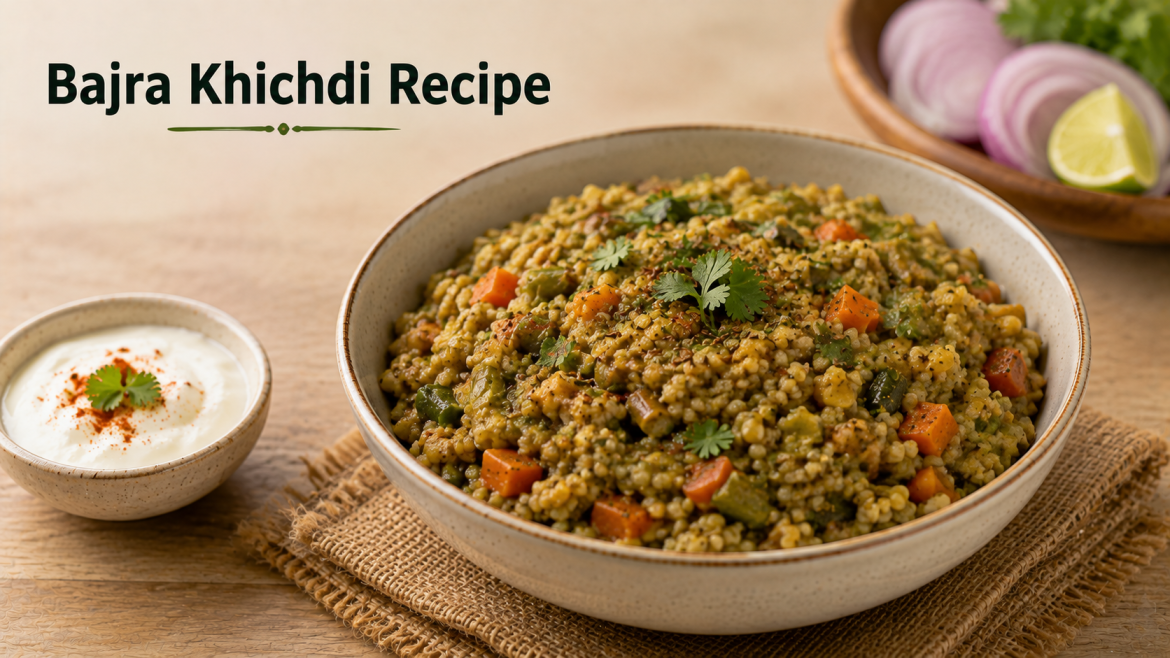
This incredibly wholesome, beautifully hearty, and deeply comforting Bajra Khichdi is the ultimate wintertime dinnertime savior for anyone looking to bring the rustic, earthy flavors of traditional Western Indian home cooking right into their own kitchen. Whether you are meal-prepping for a busy academic week, feeding a health-conscious family, or simply searching for easy and healthy vegetarian dinner recipes to effortlessly elevate your meatless rotation, this millet and lentil marvel hits all the right marks. Packed with protein-rich moong dal and fiber-dense pearl millet simmered to a velvety consistency, it delivers massive, homestyle satisfaction while remaining exceptionally budget-friendly, naturally gluten-free, and remarkably easy to assemble in a single pressure cooker.
Origin Bajra Khichdi
The culinary history of Bajra Khichdi is deeply rooted in the arid, desert regions of Rajasthan and Gujarat, India. Historically, pearl millet (bajra) has been a vital staple crop in these areas due to its incredible resilience in harsh, dry climates. For centuries, rural farmers and agrarian communities relied on this warming, energy-dense grain to sustain them through cold winter nights. By combining the hardy millet with easily digestible lentils and a generous tempering of rich ghee, historic cooks created a perfectly balanced, sustaining meal. Today, recognizing the profound health benefits of ancient whole grains and millets, modern home cooks celebrate this rustic, golden-hued classic as a highly functional, nutrient-dense centerpiece that perfectly balances traditional, austere cooking methods with robust, aromatic indulgence.
Why I Love This Recipe
I love how this recipe transforms the most basic, inexpensive pantry staples into a genuinely spectacular, highly texturized centerpiece with practically zero complicated prep. It completely eliminates the heavy, sluggish feeling that often accompanies rich, cream-laden restaurant meals, relying instead on the natural creaminess of the slow-cooked dal and the earthy, nutty chew of the millet to beautifully satisfy your appetite. It is one of the absolute best quick and comforting healthy dinner ideas because the pressure cooker does all the heavy lifting, turning tough grains into a luscious porridge in minutes. You can serve your Bajra Khichdi classically alongside a dollop of fresh yogurt and spicy garlic chutney, or pair it with roasted papad and a bright cucumber salad for a complete, transportive meal.
Tips for the Perfect Texture
To achieve a flawlessly creamy, deeply comforting porridge rather than a gritty, undercooked mush, managing your grain preparation and water ratios is absolutely critical. First, you must aggressively wash and then soak the bajra for at least 4 to 8 hours before cooking. This is an essential expert pressure-cooking technique; bajra has a very tough outer bran, and soaking ensures it softens completely and cooks evenly alongside the quicker-cooking lentils. Furthermore, khichdi is meant to be slightly loose and soupy right out of the pot. It will thicken dramatically as it cools, so do not be afraid to add a little extra warm water when you open the cooker to achieve that signature, luxurious consistency before pouring your sizzling ghee tadka (tempering) over the top.
Also Read : Espresso Martini Mocktail
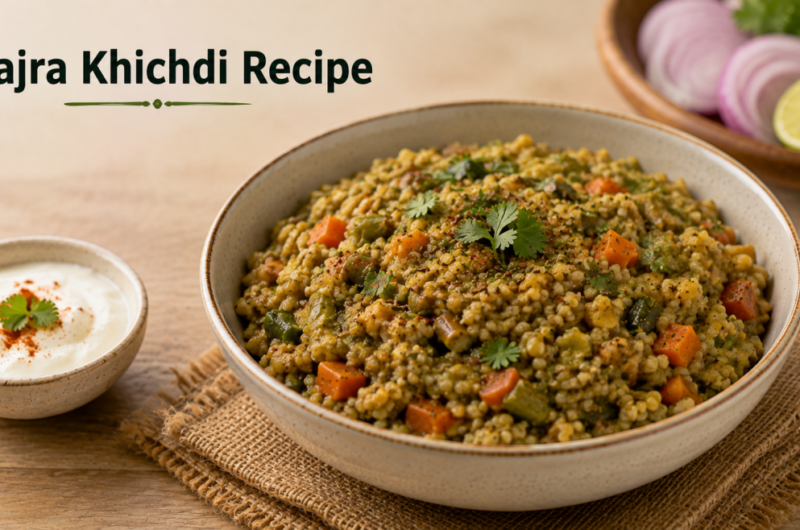
Bajra Khichdi Recipe
Course: DinnerCuisine: North IndianDifficulty: Easy4
servings10
minutes25
minutes264
kcalIngredients
For the Khichdi:
½ cup Bajra (pearl millet), washed and soaked for at least 4 hours
½ cup yellow Moong Dal (split green gram), washed and drained
3 ½ to 4 cups water
½ tsp turmeric powder
1 tsp fine sea salt
For the Tadka (Tempering):
2 tbsp pure ghee (clarified butter)
1 tsp cumin seeds (jeera)
¼ tsp asafoetida (hing)
1-inch piece of ginger, finely grated or minced
1-2 green chilies, slit lengthwise
1 dried red chili (optional)
For Garnish: Fresh cilantro (coriander) leaves and an extra drizzle of ghee
Directions
- Prep the Millet (Crucial Step): Drain the soaked bajra completely. If you prefer a smoother texture, you can pulse the soaked bajra once or twice in a food processor to lightly crush the grains, but this is optional.
- Cook the Grains: In a pressure cooker or Instant Pot, combine the soaked bajra, rinsed moong dal, water, turmeric powder, and salt.
- Pressure Cook: Secure the lid. If using a traditional stovetop pressure cooker, cook on medium-high heat for 4 to 5 whistles, then lower the heat and simmer for 5 more minutes. Let the pressure release naturally. If using an Instant Pot, cook on high pressure for 15 minutes with a natural pressure release.
- Mash to Creaminess: Carefully open the lid once the pressure is gone. The bajra should be completely tender. Use the back of a ladle to vigorously stir and lightly mash the grains against the side of the pot to achieve a creamy, porridge-like consistency. If it looks too thick, stir in ½ cup of warm water.
- Prepare the Tadka: In a small tempering pan or skillet, heat the ghee over medium heat. Once hot, add the cumin seeds. As soon as they splutter, add the asafoetida, dried red chili, slit green chilies, and minced ginger. Sauté for 30 seconds until the ginger is fragrant and lightly golden.
- The Flavor Finish: Immediately pour the sizzling, aromatic ghee directly over the cooked khichdi. Stir gently to incorporate the beautiful flavors into the porridge.
- Serve: Garnish your steaming, hearty Bajra Khichdi with fresh chopped cilantro and an extra spoonful of ghee. Serve piping hot with a side of plain yogurt, pickles, or roasted papad!
Notes
- Vegetable Addition: To make this a complete one-pot meal, add ½ cup of mixed finely chopped vegetables (like carrots, green peas, and potatoes) to the pressure cooker along with the grains in Step 2.
- Vegan Alternative: To make this completely dairy-free, simply substitute the ghee with a high-quality neutral oil or coconut oil during the tempering stage.
- Storage and Reheating: Store leftovers in an airtight container in the refrigerator for up to 4 days. Millets absorb a lot of liquid as they sit, so you will need to add a splash of hot water and stir well when reheating to restore the creamy texture.